Fear of change can block sustainable transformation
Many people and companies fear and resist change due to uncertainty and perceived higher risks. But the risk of not adapting can be higher - what biases are involved and how do we move forward?

Terrafiniti
Sustainability Consultancy, Sustainability Consultants, Sustainability
Many people and companies fear and resist change due to uncertainty and perceived higher risks. But the risk of not adapting can be higher - what biases are involved and how do we move forward?
There are several types of relationships between species, bu tit's clear that the human relationships with the biosphere are closer to parasitic than any others. Isn't it time to pursue more positive outcomes - if only for self-interest?
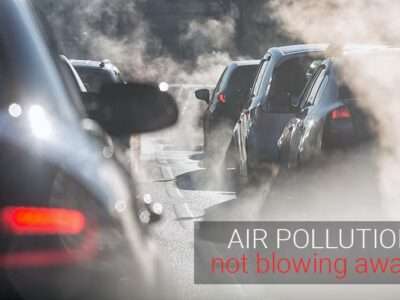
Small particle air pollution – when will we clear it? PM2.5 (small particle) air pollution is one of the most harmful types for human health, exposure has been linked to heart and lung disease, mental health and many other conditions including stroke, cancer and mental health. Air pollution also disproportionally affects children. A global study …
Most major sustainability issues have important risk dimensions for companies – and societies. In many cases these are still not adequately represented in board-level discussion, company risk assessments or registers.
WEF’s Global Risk Report provides a very useful, comprehensive global review and outlook upon what is important, and this article provides an overview of 2022’s report.
Intent in sustainability can be the difference between differentiating a strong (if nascent) approach from a shallow one.
But intent can be difficult to demonstrate to a cynical world.
Overall Glasgow’s COP26 made good progress in some areas but failed to move others forward - what was really achieved? The world is still way off track for the Paris 1.5 degrees C – the widely accepted target that only really represents ‘hopefully not too dangerous’.
COP26 in Glasgow is possibly the most crucial event for the global community to properly develop climate responses. Does the announcement of the ISSB herald a new dawn for climate disclosure and the end of greenwashing?
While we've been concerned with action on climate and tied up with Covid19, a larger, related crisis is brewing. Businesses are waking up to the need for action on biodiversity.
Biodiversity is one of many issues organisations should consider when developing (or reviewing) sustainable business strategy. Many organisations have biodiversity-related dependencies and impacts stemming from their location, supply chains, products and services.
An IMF report this week (6th October 2021) suggests the fossil fuel industry receives subsidies of $5.9tn per year – or a more understandable $11m per minute. The climate crisis is already big enough – why are we stoking the fire?
Sustainability Professionals Resilience Group | SPRG Simply making money is no longer seen as sufficient by many. Demonstrating purpose and social value is increasingly important. The World Economic Forum, among others, is promoting “Stakeholder Capitalism”, with a focus on companies playing a positive role in solving global challenges and reducing inequality. BlackRock’s (the world’s largest …
Choice is a leading aspect of modern life and is a powerful tool in the marketplace. But how much is real and how much of this choice is an illusion? And where does responsibility lie to choose sustainability?
Should it lie with consumers encouraging businesses to converge with their values?
Or are the issues so important for long-term wellbeing and quality of life that the appearance of choice is an illusion and businesses must place sustainability in the heart of their business models?
This week (Thursday 14th January 2021) we're delighted to welcome Virginie Coulloudon (Executive Director) and Maria del Peso (Vice-Chair of the Supervisory Board) from Your Public Value, Berlin.
Virginie and Maria will be talking about their work on Common Good and Profit and presenting their Public Value Principles for Sustainable Business.