
Recent examples and developments in greenwashing
Understanding environmental claims can be complicated and navigating the rules often causes confusion or uncertainty.
This page provides news updates on greenwashing, including notable developments, regulatory action and commentary on what you need to know to reduce your communication risks and concentrate on the right messages in the right way.

Adidas, Calvin Klein and Uniqlo ads banned – the trouble with ‘recycled’
UK, June 2026
Six months on from Nike, Superdry and Lacoste, the ASA has banned three more fashion ads, and this time a single word is doing all the damage. “Recycled” looks harmless enough. But, used without qualification, it turns out to be an absolute claim in disguise.

The Advertising Standards Authority has upheld complaints against paid Google search ads from Adidas, Calvin Klein and Uniqlo, ruling that each made a misleading environmental claim about recycled content. All three were caught by the ASA’s AI-powered Active Ad Monitoring system, and all three form part of the regulator’s continuing project on environmental claims in the retail fashion sector, likely part of the same sweep that produced the Nike, Superdry and Lacoste rulings at the end of last year.
The ads themselves were unremarkable, which in some ways is rather the point.
Adidas ran a search ad for ‘Adidas Recycled Running Shoes […] Check Out Our Recycled Shoe Range Today’. Adidas argued that consumers would understand this to mean the shoes contained materials derived from recycled sources. The ASA disagreed, and noted, that Adidas didn’t even operate a standalone recycled running shoe range. Consumers, it concluded, would read the claim as meaning the products were made entirely from recycled materials, and the evidence didn’t show that.
Calvin Klein promoted ‘Responsibly sourced collections – Recycled, Organic & More’ across its women’s tops. The brand said it wouldn’t be reasonable to read this as meaning every product was wholly or partly made from those materials. Again, the ASA took a consumer’s-eye view and stated that shoppers would expect the clothing to be entirely made from recycled or organic fabrics. Some garments were only partially composed of them, none of the recycled products were entirely recycled, and the basis of the claim hadn’t been explained.
Uniqlo advertised women’s fleece coats and jackets with the phrase ‘Recycled Materials’. Here, the brand had a stronger hand, the main body fabric genuinely was recycled polyester, backed by third-party certification. But the zips and labels weren’t recycled, and the ASA held that consumers would read ‘Recycled Materials’ as an absolute claim that all the fabrics were entirely recycled. As that couldn’t be substantiated, the claim failed, and Uniqlo was told to make the extent of recycled content clear in future.
The thread connecting all three is the one we return to again and again. An ‘absolute’ claim, deployed without precision. Each brand offered the same essential defence, that ‘recycled’ would be interpreted modestly, as ‘contains some recycled material’. The ASA’s answer was the same each time, without qualification, consumers understand it as a general claim, therefore assuming it’s ‘made entirely from recycled material’. And notably, pointing to a landing page or a product page isn’t sufficient; the basis of the claim has to be clear in the ad itself.
The rulings didn’t land in isolation. Alongside them, the ASA published a study that analysed some seven million ads and found only around 1% carried an environmental claim, but that, when such claims did appear, they were frequently framed in broad or absolute terms. Separately, the CMA has advised 17 well-known fashion brands to review their sustainability claims. As Miles Lockwood of the ASA put it, when absolute terms like ‘recycled’ are used, the basis should be clearly explained and properly evidenced. The message to the sector could hardly be clearer.
TAKEAWAYS
What can we learn?
- ”Recycled’ is an absolute claim unless you qualify it. State the percentage, which components it applies to, and the type of recycled content. A bare ‘recycled’ invites consumers, and the regulator, to assume high performance.
- Partial truth is not a defence. All three brands genuinely used recycled materials. That wasn’t the issue; the failure to explain, or be clear about, the extent was.
- The landing page won’t save you. Material qualification has to sit with the claim, in the ad. A fuller explanation one click away doesn’t cure a misleading headline.
- Paid search is firmly in scope, and AI is finding it. Every one of these was a Google ad, surfaced by the ASA’s Active Ad Monitoring system. Small-format, lower-profile ads are no longer below the radar.
- This is a campaign, not a run of one-offs. With the ASA’s fashion project, its seven-million-ad study, and the CMA writing to 17 brands, the sector is under sustained, coordinated scrutiny. If you sell fashion in the UK, assume your green claims will be looked at.
The EU’s offset ban arrives – even as the Green Claims Directive stalls
EU, June 2026
The EU’s approach to environmental claims took an unexpected turn in 2025, one major law collapsed, while the one that matters most for carbon claims marched quietly on. With a hard deadline now approaching, here’s what businesses selling into Europe need to know.
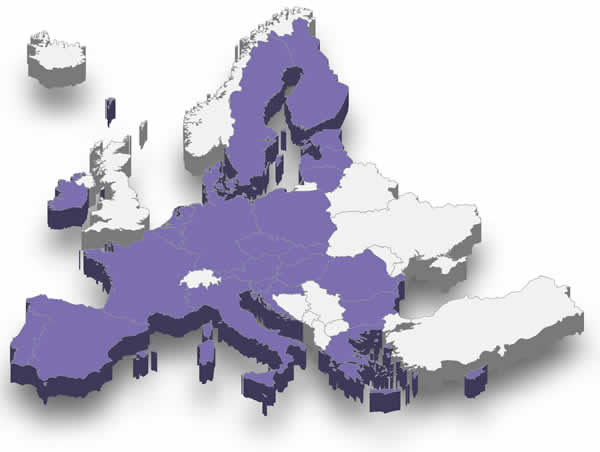
Two separate pieces of EU law are routinely confused, and the confusion now matters, because their fates have diverged.
The first is the Green Claims Directive (GCD). Had it passed, it would have been the most demanding green-claims regime anywhere, science-based substantiation, life-cycle evidence and, most controversially, independent third-party verification before a claim could be made. In June 2025 the European Commission announced its intention to withdraw the proposal, and the final round of negotiations was cancelled after the European People’s Party and Italy pulled their support. The sticking points were the compliance burden on Europe’s millions of micro-enterprises and the ‘ex-ante’ verification requirement. The proposal has not been formally killed off, the Parliament has signalled it would resume talks, but for now it is dormant, and its future is uncertain.
For many businesses, that felt like a reprieve. However, it isn’t.
The second measure, the Empowering Consumers for the Green Transition Directive (the ‘ECGT’, or ‘EmpCo’, Directive (EU) 2024/825) is already law, and it is unaffected by the GCD’s troubles/demise. It entered into force in March 2024, member states were required to transpose it by 27 March 2026, and its rules apply across the EU from 27 September 2026. Among other things, it bans generic environmental claims that can’t be substantiated and, critically prohibits ‘carbon neutral’, ‘climate neutral’ and similar product claims where they rest on carbon offsetting. Only sustainability labels backed by approved certification schemes will be permitted.
In simple terms, from late September 2026, you will not be able to put a ‘carbon neutral’ badge on a product sold in the EU on the strength of offsets. The substantiation-and-verification regime may be on hold, but the offset ban is going ahead.
National courts, meanwhile, aren’t waiting for Brussels. In June 2024 Germany’s Federal Court of Justice ruled that the term ‘klimaneutral’ (climate neutral) is inherently ambiguous, and that any company using it must explain what it means, i.e. reduction, offsetting, or both, within the advertisement itself, not via a QR code or a linked page. It is a precise echo of the principle the UK’s regulators have been following, to put the evidence next to the claim.
Taken together, an outright ban on offset-based product neutrality claims, reinforced by national case law, the European position on this specific issue is now tighter than the UK’s, where a properly qualified carbon-neutral claim can, in principle, still be made.
TAKEAWAYS
What does this mean for your communications?
- The offset ban survived. Don’t let coverage of the Green Claims Directive’s collapse lull you into thinking the pressure is off. The measure that bans offset-based carbon-neutral product claims, the ECGT, applies from 27 September 2026.
- Diverging regimes, one sensible response. With the EU now stricter than the UK on this point, businesses selling into both markets are generally best served by unifying to the tougher standard rather than running different claims in different jurisdictions.
- ‘Carbon neutral’ is becoming a product-level liability. For many products, the most defensible course is to drop the badge altogether and communicate specific, evidenced reductions instead, see our guidance on carbon neutral claims and communications.
- The direction of travel is unmistakable. Even where individual proposals stall politically, the regulatory and judicial trend across Europe is towards less tolerance of vague or offset-dependent claims, not more.
Kit & Kin and Cheeky Panda ads banned
UK, February 2026
Over enthusiastic (and ‘loose’) messaging continues to break the rules and invite negative news, even when brands are apparently trying hard on sustainability and differentiating products to compete on this basis.

Kit & Kin
The disputed claims appeared on a page promoting the company’s “Eco nappies & wipes” range in August 2025. These included statements such as “PROTECTING YOUR WORLD, NATURALLY,” “High‑performance eco nappies […] better for our world,” and assertions that each purchase helped protect acres of rainforest. The products were also described as “sustainable.”
According to the ASA, the website further promoted “eco nappies” as “Sustainable” and “Made from sustainable, plant‑based materials,” while “biodegradable baby wipes” were marketed as “99% water, Biodegradable, 0% plastic.” Both listings featured phrases such as “Protecting your world, naturally […] Planet‑conscious. Protecting our future.”
Procter & Gamble UK challenged these claims, arguing they created a misleading impression of the products’ environmental impact. They contended that terms such as “Sustainable,” “Made from sustainable […] materials,” and “biodegradable” were not adequately substantiated.
In its ruling, the ASA emphasised the need for clarity and robust evidence when making environmental claims, particularly absolute ones. It interpreted the term “eco” as implying the products caused no environmental harm throughout their entire life cycle.
Kit & Kin argued that their B Corp certification, use of FSC‑certified materials, hypoallergenic products, carbon‑neutral manufacturing, and partnership with the World Land Trust supported their claims. However, the ASA noted that this information was not present in the ads and, even if it had been, did not substantiate claims of “protecting the environment.” The ASA also stated that no evidence had been provided to show the products caused no environmental harm across their life cycle.
Although similar rulings have occurred previously, this case is notable because the complaint was filed by a major competitor, P&G. While activist groups commonly invoke greenwashing regulations, competitor‑driven complaints are less typical.
When advising organisations on responsible communication, we often hear frustration from companies that aim to comply with regulations, while others appear to push the boundaries. This case may reflect those tensions—or simply competitive dynamics at play.
Cheeky Panda
The Cheeky Panda’s website also made several environmentally‑focused claims relating to nappies and baby wipes.
For Bamboo Nappies
Sustainable Bamboo, Bamboo to the core, “Made from sustainable bamboo”, “Kinder to the planet \[…] protecting the planet.”
For the Bamboo Baby Wipes
“Biodegradable Baby Wipes”, “Biodegradable Fibres” and claims suggesting the wipes leave “no trace” and degrade quickly in bins.
Like the Kit & Kin case outlined above, complaints were again brought by FMCG giant Procter & Gamble, which challenged whether the claims were misleading.
The ASA upheld all the complaints. It rules that the claims made were “absolute” (i.e., strong claims) and therefore required full product life‑cycle evidence across the entire product lifecycle (from materials, through manufacture and use to disposal).
It also stated that the evidence provided by Cheeky Panda (mainly an LCA for toilet paper and FSC certification) did not specifically cover the nappies or wipes themselves, or their disposal.
On the biodegradability Claim, the ASA held that consumers would understand “biodegradable wipes” to mean that the entire wipe would break down fully, and quickly, leaving “no harmful residue” in typical household bin conditions. The evidence provided only showed viscose fibres biodegrading partially under controlled conditions and not the whole wipe in real‑world settings. It therefore ruled that claims like “leaves no trace” and biodegrading “faster than your kids grow up” were misleading.
Considering the claim “Kinder to the Planet”, the ASA found this to be a ‘comparative environmental claim’ (implying the nappies were better for the planet than alternatives). Their assessment was that no adequate evidence was provided to demonstrate: ‘lower environmental impact’ than competitor nappies, or that the product was “protecting the planet.” They rejected supporting information from the UN, DEFRA, and articles on bamboo as they did not substantiate the claims.
This finding, like some other cases, highlights that not only is evidence required when making claims, but that it has to underpin the explicit claim, i.e. it has to be specifically relevant, and show the effect claimed. The Defra report compared LCAs from 2001 – 2002 for disposable, home laundered cloth, and commercially laundered nappies – but it found little difference in environmental impact between the three scenarios. The journal article provided information ‘on the developmental biology of bamboo’, not the sustainability of products made from highly processed bamboo derivatives like viscose. According to the ASA, the UN report showed that ‘the relative environmental performance of replacing plastic in single-use nappies with bio-based material was not clearcut’.
In such cases, it’s unclear what the underlying knowledge or motivations are. Our own work suggests that in many cases there’s ignorance of the law and a general lack of scientific and environmental literacy in companies, which can give rise to these situations. The perception of risk can also be reduced because the company considers that membership of certifications such as B Corp, coupled with their intention to do the ‘right thing’ provides some sort of protection.
However, in recent guidance, the CMA has reiterated that neither of these characteristics provides an acceptable defence.
TAKEAWAYS
What can we learn?
- Regulatory scrutiny – this ruling is part of a continued effort by the ASA (and CMA) to clamp down on greenwashing and misleading advertisements, especially those related to sustainability and environmental claims.
- It’s difficult to hide – if the regulators don’t find you via their routine work and AI tools, then your competitors may also hand you in.
- Some marketers continue to conflate actions to reduce environmental (and social) impacts with sustainability and make absolute (or general) claims on the back of this. Being a B Corp demonstrates a recognised commitment towards pursuing sustainability – but it doesn’t make your company or its products ‘sustainable’.
Why Green Claims Need a Value Chain Approach
UK, January 2026
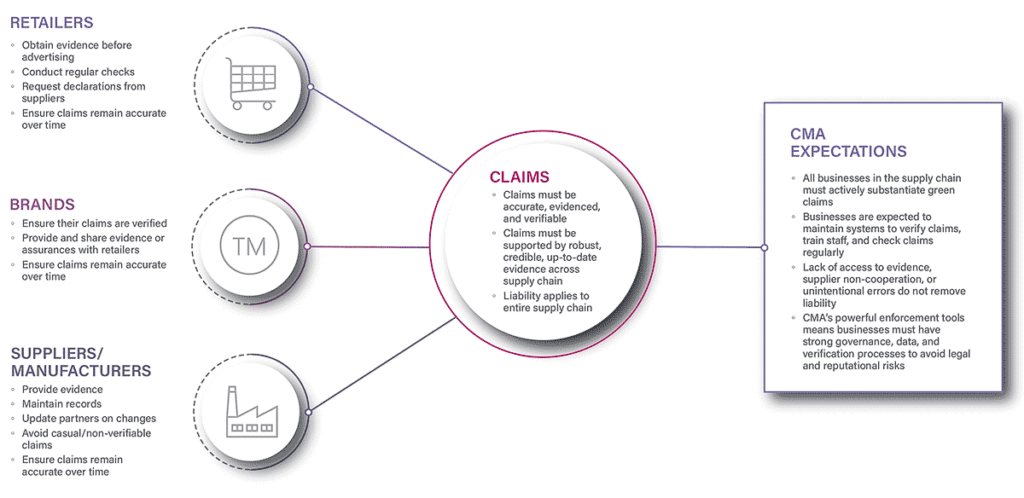
We (not uniquely) have long emphasised the importance of taking a strategic and value chain approach to making green claims, and in January 2026 this point was powerfully (re)stated by the Competition and Markets Authority (CMA) in new guidance on making green claims and the supply chain. (Note, while the CMA’s jurisdiction is the UK , its guidance provides a useful guide to good practice and is typically very similar to the requirements of other regulators in other countries).
A quote from the CMA captures the main message well:
“If you are unable to obtain the information needed to satisfy yourself of the accuracy of a claim, you should consider whether you should make the claim differently, in a way you can verify.”
I’ve highlighted some of the key aspects and considerations emphasised by the CMA and the illustration below captures some of the most important points.
The core principle is:
1. Claims must be accurate, evidenced, and verifiable.
While this has always been a central principle of the Green Claims Code, the CMA’s most recent guidance underlines that, secondly:
2. Liability applies across the entire supply chain.
This has also always been the case, but the CMA sees the need to re-state and emphasise that this wide scope applies to claim substantiation:
3. Claims must be supported by robust, credible, up‑to‑date evidence across the supply chain.
The other key aspect the regulator highlights is with regard to the intention behind the claim.
When speaking or taking part on panels I’ve regularly been asked questions like “what if our intentions were good” or “does it matter if we’ve done some due diligence?”.
Here, again, the CMA is clear, the law does not require intent (meaning it doesn’t care about intent) and unwitting or innocent breaches are still breaches. It also states that “due diligence” is not a defence in civil cases.*
The CMA also provided some rare insight into its action. It reiterates that businesses should already understand the rules, especially where guidance already exists and that it’s more likely to take action (*) where:
- businesses lack proper internal processes for verifying claims
- businesses fail to correct issues proactively or do not provide consumer redress.
It could be argued that none of this is especially new, or surprising. However, the regulator publishing guidance provides some insights into what it sees as important, where it is perhaps getting frustrated/might take action and some of its current concerns.
The actions and performance of many of the key actors in the market are lagging behind regulatory requirements and expectations, therefore this is perhaps a salutatory warning to shape up or suffer the consequences.
TAKEAWAYS
Has anything changed?
- Not much has changed, but the regulator has reiterated several points already present within the guidance – and the implications that arise.
- The guidance reinforces the need for good evidence to substantiate claims – and has clarified that this applies across the value chain.
- It’s suggested that information provided by suppliers should be checked and suppliers changed if they can’t provide the right standard of performance.
- It is not a valid defence to say that your claims were made in good faith with good intentions.
- Businesses that lack proper internal processes for checking claims are likley to be at higher risk.
* NOTE: We provide insight from a sustainability perspective, NOT legal advice or legal opinion of any sort. Refer to your legal team/advisors for legal advice.
Nike, Superdry and Lacoste ads banned
UK, December 2025

Claims that products are sustainable are not difficult to find. If you are familiar with good practice in responsible green communications and/or the Green Claims Code, you’ll know that making such an ‘absolute’ claim sets a high bar for substantiation of that claim. Absolute claims require comprehensive, high-quality evidence to back them up which should apply to the entire lifecycle of the product unless partial relevance is very clearly stated.
In practice this means that absolute or general claims are high risk and should generally be avoided. In practice of course, companies still make absolute claims – as is the case in the examples described here – with the result that ads were banned.
The Superdry Google ad, stating “Superdry: Sustainable Style. Unlock a wardrobe that combines style and sustainability […]” was found to fall short on clarity, meaning and available evidence.
The Nike Google ad stated, “Nike Tennis Polo Shirts – Serve An Ace With Nike […] Sustainable Materials”. This was found to be misleading because the basis and meaning of the claim ‘sustainable materials’ had not been made clear and lacked evidence to support it.
Interestingly, Nike claimed sustainability based on using recycled polyester materials in the product and referred to an industry tool (Higg MSI) showing the environmental impact of using recycled polyester and a relative reduction in carbon impacts compared to virgin materials. Nike considered this an environmental benefit. The UK ASA (Advertising Standards Authority) considers that a product described as ‘sustainable’ should at the least have no detrimental impact on the environment, and this was not demonstrated by Nike.
We can see an emerging pattern here, the Lacoste ad stated, “Lacoste Kids – Sustainable […] clothing”. When challenged by the ASA, Lacoste provided information which did show a reduction in environmental footprint across the main life cycle stages of their SS25 Kids collection – compared to 2022. However, the ASA’s assessment considered that: “Lacoste had not provided evidence to demonstrate that their products had no detrimental effect on the environment, taking into account their entire life cycle.” – a threshold implied by the use of an absolute claim of performance like “sustainable clothing”.
TAKEAWAYS
What if anything has changed, what can we learn?
- It’s no coincidence that these three similar ads/claims received rulings at the same time (03-12-2025). The ASA (as well as the CMA – UK Competition and Markets Authority) has been doing wider work investigating environmental claims in the retail fashion sector..
- Both the ASA and the CMA have said that they use AI systems to proactively identify non-compliant communications. In these cases, the ASA used their Active Ad Monitoring system. The lesson here is that companies run a real and active risk of regulatory action and reputational impacts for inaccurate and misleading sustainability-related messaging.
- Perhaps the end of the era of companies blithely claiming that their products are sustainable is in sight.
FAILING STANDARDS? – FACILITATING GREENWASHING?
Communicating well on sustainability while avoiding greenwashing can be confusing. Badges and accreditation schemes can provide a useful way to demonstrate third-party accreditation of performance.
But what if the badge fails to deliver expectations or standards?
Marine Stewardship Council (MSC) and Red Tractor have received criticism in recent years and now B Corp is in the spotlight again after high-profile member Dr Bronner’s very publicly quit the scheme (March 2025).
Third-party sustainability schemes and certifications aim to offer transparency and promote environmental and social responsibility. This is a hugely difficult task at the best of times. Even the efforts of sophisticated ESG rating agencies produce ratings and scores of uncertain value.
The schemes are fraught with tensions between trying to promote and enforce standards, maintaining integrity and balancing complexity with relative ease of access.
At the same time, they are trying to build scale. If they are to have a significant impact, then they need to grow beyond small-scale, niche and purpose-led businesses to large multinationals. This is where many of the tensions arise. Dr Bronner’s, among others, have objected to Nestle’s membership of B Corp through their Nespresso brand. In 2020 Nespresso was accused of having coffee suppliers using child labour, and the packaging-intensive capsules have long been controversial in environmental terms. More recently, B Corp has launched new standards.
Criticisms of schemes include:
- Possible potential conflicts of interest – when schemes rely upon membership and certification fees
- Limited accountability – often weak or limited enforcement of standards once companies are admitted
- Standardisation – criticism of weak standards (as above) or dilution to accommodate more businesses
- Consumer misunderstanding and complacency – consumers don’t always understand all the issues and place trust in ‘badges’ this can allow companies to avoid further scrutiny
- Cultural bias – imposing Western-centric standards that may not fully account for local contexts, traditions, or needs
TAKEAWAYS
So, where does this leave sustainability standards schemes?
- Schemes are far from perfect – and would be unrealistic to expect this.
- Schemes have to strike a balance between pursuing and delivery genuine and meaningful value and viability and feasibility in the real world. This kind of middle ground will always attract criticism – often valid and often necessary to allow for fixing flaws and driving continuous improvement.
- The challenge for sustainability professionals and communicators if establishing where they are useful and where they actually represent a risk of greenwashing.
UK Strengthens Enforcement Against Greenwashing: What Businesses Need to Know in 2025
Recent updates in UK consumer law have significantly strengthened action against greenwashing. The Digital Markets, Competition and Consumers Act (DMCC) 2024, effective from April 2025, gives the Competition and Markets Authority (CMA) new powers to directly penalise misleading environmental claims, with fines up to 10% of global turnover.
Greenwashing is now explicitly unlawful, and liability extends across supply chains. The Advertising Standards Authority (ASA) has also updated its codes to align with these changes. Together, these reforms create a tougher regulatory environment, making it easier for authorities to crack down on false or exaggerated green claims.

What does this mean for greenwashing?
It depends upon your outlook. In recent years the CMA has been clear about increasing its scrutiny on environmental/sustainability claims made by businesses. The DMCC provides the CMA with much greater enforcement powers and the guidance suggests that green claims will remain a priority. Under the Act, greenwashing is considered to be an ‘unfair commercial practice’ and is therefore deemed unlawful.
Continued focus on greenwashing
In March, the CMA outlined its enforcement priorities ahead of the new powers coming into force. The organisation suggested that early enforcement would focus on the more ‘egregious breaches’.
The example priorities in the first column below are quoted from the CMA’s blog (https://competitionandmarkets.blog.gov.uk/2025/03/10/our-new-consumer-enforcement-regime/), the second column provides our interpretation.
| CMA examples (direct quotation) | What might this mean for greenwashing? |
|---|---|
| aggressive sales practices that prey on vulnerability | The UCP (Unfair Commercial Practices provisions in the DMCC) describe consumers interested in reducing environmental impacts and suggests that they might be vulnerable (credulous) to inaccurate messaging on the environment |
| providing information to consumers that is objectively false | Misleading green claims often include false information. |
| contract terms that are very obviously imbalanced and unfair | N/A |
| behaviour where the CMA has already put down a clear marker through its previous enforcement work | The CMA has previously made green claims a focus. |
| where the law tells us that a practice is always unfair”. | Described by Schedule 20 of the DMCCA), does not appear to specifically relate to green claims. |
Changes in law
Two changes introduced by the DMCC Act relates to green claims/greenwashing. They stem from the revocation and restatement of the Consumer Protection from Unfair Trading Regulations 2008 (CPRs) by the new Unfair Commercial Practices (UCP) provisions in the DMCC.
Extending consumer law
There is now a broader value chain concept applied to ‘commercial practices’ that includes claims and statements made about branded products supplied by third parties. Suppliers must be able to substantiate claims they make and all businesses in the supply chain are potentially liable for misleading claims.
Changing legal tests
The Act simplifies legal tests, making it easier for the CMA to take action. For example, if a business omits material information on a product, it is now automatically unlawful. The CMA no longer needs to prove that such omissions affect consumer decisions. This can include the omission of material information on a product’s environmental impact.
Tougher regime for enforcement
Direct enforcement is another major change under the new Act. The CMA can now determine breaches of consumer law and issue penalties with having to go through the counts.
It’s currently unclear how the new enforcement regime will play out. To date serial green washers have benefited from the fact that taking legal action is a lengthy and complex process. Now however, the new direct powers granted to the CMA may change that – although sanctions can be still be appealed through the courts.
What are the penalties?
The CMA has the power to issue fines. The level of fines will be determined by several criteria including the size (turnover) of the company, how serious the breach is, and other related factors including the level of harm and culpability (which can be exacerbated by, for example, having ads banned by the ASA). These are all descried in published guidance.
Maximum fines are up to £300,000 or 10% of global turnover – whichever is higher. There is a new settlement procedure that can allow for a reduction in fines if certain conditions are met – one of which is an admission of wrongdoing.
Advertising Code Changes
In early April 2025, the Advertising Standards Authority (ASA) updated the UK advertising codes (CAP and BCAP Codes) to align with the DMCC’s UCP provisions.
The ASA is in the process of updating its guidance and advisory resources to reflect these changes, in the meantime it refers advertisers to CMA’s guidance on the UCP provisions.
Most rules on misleading advertising remain substantively the same, but the advertising codes have been amended to closely reflect the updated legal framework in the DMCCA.
TAKEAWAYS
What can we learn from these developments?
- A higher overall risk environment for businesses (recognised by the CMA).
- Higher financial penalties for transgressions.
- Green consumers are considered as a potentially vulnerable group – because they are interested in environmental claims and could be taken in by them.
- There is coordination between regulators – when considering a case, the CMA would look for any previous action ASA rulings, and if present, this would be seen as an aggravating factor.
- Basic green claims guidance on what constitutes greenwashing remains the same.
- The new Act represents an increasing focus on greenwashing, and higher risks for those organisations found to be misleading consumers with environmental claims. The dangers of greenwashing, and the need to ensure that consumers receive clear, accurate and substantiated information mean that advertisers and marketers need to be ever more vigilant, careful and creative to ensure that they undertake responsible communications on environmental performance.

Fashion Industry Greenwashing Review – CMA Secures Pledges
UK, March 2024
The UK’s CMA (Competition and Markets Authority) has issued an update (27/03/2024) on their 20-month probe into ‘green’ claims in the fashion industry.
The investigation had previously named ASOS, Boohoo and George (Asda) and the update reveals that these companies have signed formal agreements to ‘use only accurate and clear green claims’.

The CMA indicates that these undertakings require commitments in several areas to change the way that they describe, display and promote green claims, including:
- Claims – all claims must be clear, accurate and not misleading
- ‘Green ranges’ – must be clearer. The criteria for inclusion must be clearly described and include descriptions of the minimum requirements. Products should only be included in environmental ranges when they meet all the relevant criteria.
- Imagery – the use of natural imagery must not be used to suggest better environmental performance than can be demonstrated.
- Fabrics and content – these must be clear and explicit, so should include ‘recycled’ or ‘organic’ rather than ‘eco’, ‘responsible’, or ‘sustainable’ and should clearly display the percentage of ‘recycled’ or ‘organic’ fibres.
- Use of filters – if a customer searches for specific criteria like ‘recycled’ then only products made from ‘predominantly recycled materials should be shown.’
- Environmental targets – these should provide details and ‘must be supported by a clear and verifiable strategy, and customers must be able to access more details about it’.
- Accreditation schemes – statements about accreditation schemes and standards must make it clear whether an accreditation applies to specific products or to the company’s wider performance.
TAKEAWAYS
What can we learn from these developments?
- Considering the implications of this, if it were a school report it would be firmly in the category of ‘Could do better’. The regulator has spelt out specific conditions and requirements that the companies must meet – and by implication, these are needed because they have not so far been meeting them.
- The 3 companies must provide the CMA with regular reports to demonstrate compliance with these commitments and how they are improving their internal processes.
- There is a wider warning – the CMA has issued an open letter to the industry, asking fashion retail businesses to review their claims and improve their practices.
Turning up the heat on the advertising industry
February 2024
Like other sectors, the advertising industry is facing increasing scrutiny over its environmental impact. But perhaps uniquely, the impacts are one step removed and are based upon involvement in and promotion of environmentally damaging sectors.

The increased attention has been substantially led by activists within the creative industries themselves, through initiatives like Clean Creatives, which has sought to raise awareness about advertising agency clients and their activities. It also encourages organisations and creatives working in the sector to refuse any future contracts with fossil fuel companies, trade associations, or front groups.
A recent report from Planet Tracker further turns up the heat on major advertisers by investigating their ownership and raising some key questions for investors about the companies they support.
The report, ‘From ADversity to ADvantage’, focuses the attention of investors and lenders in the financial sector towards the six global Holding Companies which own the bulk of major advertising agencies.
Planet Tracker notes that the top 10 investors own on average 43% of the five listed advertising holding companies and believes that these investors are complicit in allowing environmental damage if they do not press holding companies to refuse to work for clients with high environmental footprints.
In addition, the report finds that executive compensation in advertising holding companies is heavily tied to financial performance, with little or no link to client profiles or their impacts.
A common mantra of advertising agencies is that their relationships with high-impact firms can allow them to have a positive influencing role, working on the principle that it is better to be inside the tent….
But just how likely is it that advertisers, frequently engaged in specific areas of focus, are capable of influencing the strategic decisions and therefore ongoing environmental footprints of the companies they work for?
It seems unlikely that an international oil major would accept strategic advice on direction and business models from an advertising agency. Apart from anything else they don’t have the relevant expertise.
Planet Tracker’s report highlights several areas where it believes that the advertising industry’s continuing support for high-impact sectors presents not only association risk (see our overview of association risk) but also risks to revenue, staff retention, capital performance and intangible value – each of them relating to bottom line impacts that should be of fundamental concern to investors and lenders.
TAKEAWAYS
What can we learn from these developments?
From ADversity to ADvantage raises some important questions that agencies should consider:
- Do you need to have increased clarity, consistency and ready justifications for who you choose to work for?
- Will you be able to answer investor questions about your decisions and the performance of your high-impact clients?
- What share of the impacts of your clients should be assigned to you?
- Should advertising agencies be more able to demonstrate meaningful positive change through their engagements?
Carbon neutral/carbon negative rulings
UK, December 2023
‘Neutral’ and ‘negative’ sit at opposite ends of the carbon spectrum, but two ASA rulings on the same day caught them out for exactly the same reason, neither ad explained the basis of its claim.

After updating its guidance on carbon-neutral and net-zero claims, the ASA ran a monitoring exercise and then went looking for issues. On 20 December 2023, it upheld complaints against a shirtmaker and a brewer. Two very different advertisers, but the pairing is instructive.
Charles Tyrwhitt had described itself as a ‘Carbon Neutral business’. The company said the claim was based on a report from a sustainability consultancy demonstrating its carbon neutrality. The problem wasn’t whether the work had been done, it was that the ad carried no qualifying information at all about how neutrality had been reached. The ASA took the view that consumers would understand the claim to mean the business balanced the carbon it emitted with an equivalent amount removed, such that buying a product would have a net-neutral impact. With no explanation of the basis of that claim, significant information that consumers needed to understand it, the ad was ruled as misleading.
BrewDog, never knowingly understated, went further still. An Instagram post built around the line ‘BEER FOR YOUR GRANDCHILDREN’ promoted the company as ‘the World’s First Carbon Negative brewery’, complete with a ‘Positive Planet Certified Carbon Negative Company’ badge. BrewDog argued that a link in its Instagram bio, plus the certification, would lead consumers to an explanation, and that the format’s space constraints made anything more impractical. The ASA was unmoved, it stated that the ad itself set out no basis for the carbon negative claim, and so it too was misleading.
A common thread runs straight through both. The basis of a carbon claim has to be clear in the ad, close to the claim, not parked behind a badge, or a website. And where a claim rests on offsetting, that has to be visible, so consumers aren’t left assuming an absolute reduction that hasn’t happened.
There’s a postscript that makes the point better than any regulator could. In mid-2024, BrewDog quietly let its carbon negative claim lapse altogether, citing the soaring cost of credible carbon credits and a decision to spend the money on cutting its own emissions instead. An offset-dependent claim, it turns out, is only as durable as the offsets propping it up.
TAKEAWAYS
What can we learn?
- A certification badge is not an explanation. Referencing a scheme, even a real one, doesn’t discharge your duty to make the basis of the claim clear in the ad itself.
- ‘No room in the format’ is not a defence. As with the airline rulings, the ASA does not accept space or platform constraints as a reason to omit material information. If it won’t fit, the claim probably shouldn’t be made in that format.
- Show the reduction-versus-offset split. Consumers should be able to see how much of a ‘neutral’ or ‘negative’ position comes from genuine reductions and how much from offsetting.
- Watch this space on evidence. The CAP has committed to reviewing what forms of evidence are acceptable to substantiate offset-based claims, and the regulators are engaging with the Government’s planned consultation on voluntary carbon and nature markets. The bar for what counts as proof may yet rise.
- The simplest claim is often the safest. Offset-reliant ‘neutral’ and ‘negative’ claims are increasingly fragile, both reputationally and, as BrewDog found, commercially. Specific, evidenced reductions are harder to challenge. See our guidance on carbon neutral claims and communications.
CMA Investigation – Unilver in the spotlight
UK, December 2023
On the 12th December 2023, the UK’s CMA (Competition and Markets Authority) announced a formal investigation into Unilever. It will look at claims for cleaning products and toiletries after an initial investigation raised concerns.

This appears to be the first investigation stemming from a wider review launched in January 2023 when the CMA announced a greenwashing probe into the FMCG (Fast Moving Consumer Goods) sector. This was to consider if companies, large or small, were promoting products including food, drink, cleaning products and toiletries using environmental claims which were misleading consumers.
The CMA is concerned that “Unilever may be overstating how green certain products are through the use of vague and broad claims, unclear statements around recyclability, and ‘natural’ looking images and logos”.
The practice under investigation includes:
- Use of vague and broad statements that might mislead consumers about environmental impacts.
- Possible exaggerations of how ‘natural’ a product may be.
- Focus on single aspects of a product that might mislead about total environmental performance.
- Unclear claims on recyclability.
- Use of colours and imagery that may contribute to the impression that products are “more environmentally friendly than they actually are.”
CMA’s CEO Sarah Cardell said, “We’ll be drilling down into Unilever’s claims to see if they measure up”.
Reuters reported that shares in Unilever opened 0.7% down on the day of the announcement – although they rose again the next day.
The CMA is at an initial stage of its investigation and Unilever may not have broken any laws. The CMA will use its powers to gather more evidence and depending upon its findings may secure undertakings to change practices, take legal action or close the case with no further action.
TAKEAWAYS
What can we learn from these developments?
- 10 months after announcing a review, the CMA is now pursuing a formal investigation.
- The stated intent of regulators to clamp down on communications that mislead customers is being backed up by action.
- The potential non-compliances reflect common greenwashing issues.
Airlines – banned again
UK, December 2023
On the 6th of December 2023 airlines hit the sustainability headlines again – and for the wrong reasons.
The UK’s ASA (Advertising Standards Agency) banned adverts from three leading airlines – what happened? – and what can we learn from these latest rulings?

Air France
Air France’s Google ad was seen in July 2023 and stated “Air France is committed to protecting the environment: travel better and sustainably”.
The ASA challenged “whether the ad gave a misleading impression of the advertiser’s environmental impact”.
In the ruling, the ASA stated that Air France-KLM did not provide a substantive response to their enquiries.
The CAP code considers that this was an ‘absolute’ claim – and therefore:
“expected to see a high level of evidence which demonstrated how Air France were protecting the environment and making aviation sustainable.”
The issue here – as with previous rulings for other airlines is that the regulator’s assessment is that the aviation industry produces high levels of CO2 and associated climate damage and also that there are no currently available/commercially viable technologies in the aviation industry that can back up an absolute claim.
Or put another way, you can’t make an absolute claim for an unsustainable industry.


Lufthansa
Another Google ad which went out in July 2023, stated “Book your ticket directly with Lufthansa and explore destinations around the world – Fly more sustainably”.
Similarly, to the previous Air France example, the ASA thought the ad provided a misleading impression of environmental impact.
Lufthansa responded to this challenge explaining that the claim related to their ‘Green Fares’ initiative which reduces flight emissions by 20% by using sustainable air fuels and then offsets the remaining 80% of emissions. They felt this was a comparative claim because the Green Fare option was different to other fare options they offered and also those of competitors.
They also highlighted the fact that the Google Ads platform (Google Callouts) only provides very limited space for copy and that therefore consumers, used to this fact, would not expect further substantiation of the claim.
The ASA’s assessment reiterates the core principle that environmental claims must be clear and that comparative claims can be justified – but only if the basis of the comparison is clear.
The ASA agreed that the use of SAF and offsetting could reduce some of the environmental impacts of flying but that the ‘fly more sustainably’ claim was not clear in the ad.
Interestingly, while they acknowledge the lack of space in the ad area, they do not see that as a valid reason for not providing material information ‘of such relevance’.
Etihad
Etihad’s ad (on Google July 2023) stated: “Etihad Airways – Book Your Flight Today – Enjoy Great Discounts, Offers and Deals On Your Flight Bookings. Explore the World With Confidence and Total Peace Of Mind With Etihad Airways. Environmental Advocacy. Award-Winning Service”.
Just like the other two airlines’ ads the ASA’s challenge was whether there was a misleading impression of the advertiser’s impact.
In their ruling, they stated that they considered ‘Total Peace of Mind’ together with ‘Environmental Advocacy’ as an absolute environmental claim. They re-stated the consideration that the aviation sector cannot currently “adequately substantiate absolute green claims”. They also stated that they had not seen any evidence that Etihad was engaged in Environmental Advocacy.
TAKEAWAYS
What are the main things we can learn from these latest rulings?
- These rulings reinforce previous ones (Lufthansa March 2023 and Etihad October 2022) that the aviation sector should not make absolute environmental claims.
- Despite this (and being caught out twice) airlines clearly see the value of advertising on environmental performance.
- Constraints on content that arise from the ad platform used cannot be used as a defence for not providing substantiation where this is considered important.
- The ASA is pursuing wider enforcement work on communications related to climate change and the environment.
- These rulings also confirmed the ASA’s use of an AI (artificial intelligence) based Active Ad Monitoring system which searches for possible infringements online – likely to increase their ability to detect infringements.
HSBC ads banned, greenwashing by omission
UK, October 2022
For the first time, the ASA banned a major bank’s advertising for greenwashing. It did so not because of what HSBC said, but because of what it left out. It remains a definitive lesson in how selective truths can mislead.
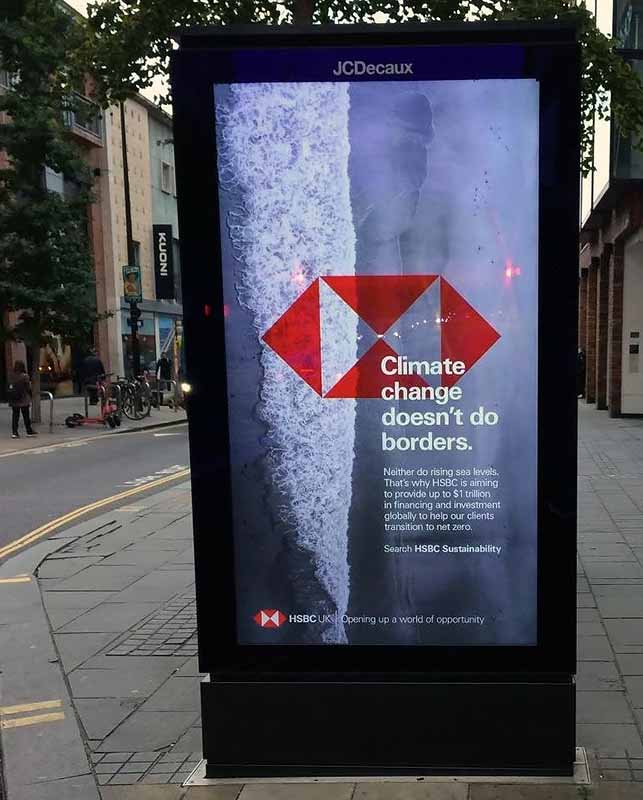
In October 2021, ahead of COP26, two HSBC posters appeared at bus stops in Bristol and London. The first declared that ‘climate change doesn’t do borders’ and that HSBC was aiming to provide up to $1 trillion in financing to help its clients transition to net zero. The second, illustrated with tree growth rings, said the bank was helping to plant two million trees that would lock in 1.25 million tonnes of carbon.
Both claims were, in themselves, true. HSBC really was financing transition and really was planting trees. That turned out not to be the point.
The ASA received 45 complaints, including from the campaign group Adfree Cities, arguing that the ads omitted significant information about HSBC’s own contribution to greenhouse gas emissions. In October 2022 the regulator upheld them, in its first greenwashing ruling against a major bank.
The figures explain why. HSBC’s financed emissions, those of the businesses it lends to and invests in, stood at around 65.3 million tonnes of CO2 per year for oil and gas alone, and the bank intended to continue funding thermal coal mining and power production for years to come. Against a footprint of that scale, the ASA concluded that consumers seeing upbeat ads about tree-planting and net-zero financing would not realise the advertiser was simultaneously financing significant emissions, and would continue to. That omission, the regulator decided, created a misleading overall impression.
The principle the ASA set out is the one every sustainability communicator should commit to memory: you don’t have to disclose everything, but you cannot create a misleading overall impression by leaving out material information. The gap between HSBC’s advertised image and its underlying reality wasn’t a matter of nuance, it was a matter of scale.
This is the textbook case of what we call misdirection by scale. The lesson is emphatically not that companies should stop communicating environmental progress. It is that genuine, positive initiatives can still mislead when they’re set against a much larger impact the audience can’t see.
TAKEAWAYS
What can we learn?
- Omission is enough. A claim can be entirely accurate and still breach the rules if it leaves out material context. True is not the same as not-misleading.
- Scale is the test. Highlighting a small positive while obscuring a much larger negative is the essence of greenwashing by misdirection, and regulators are alert to it.
- Context belongs with the claim. The ASA cautioned HSBC that future communications must be adequately qualified. Material information about your wider impact can’t simply be left off the page.
- Financial services are squarely in scope. This ruling put banks, insurers and asset managers on notice, advertising climate leadership while financing high-emitting industries invites scrutiny, and association risk runs both ways.


Can we help you?
We’ve worked with companies in the UK, Europe and
beyond to avoid greenwash by developing responsible communications approaches, content and copy. Ranging from strategic corporate reporting and disclosure to brand guidelines or in-store packs, we can help you develop content that’s clear, accurate and substantiated.
Book a chat with one of our partners to explore how we might help you – there’s no obligation!